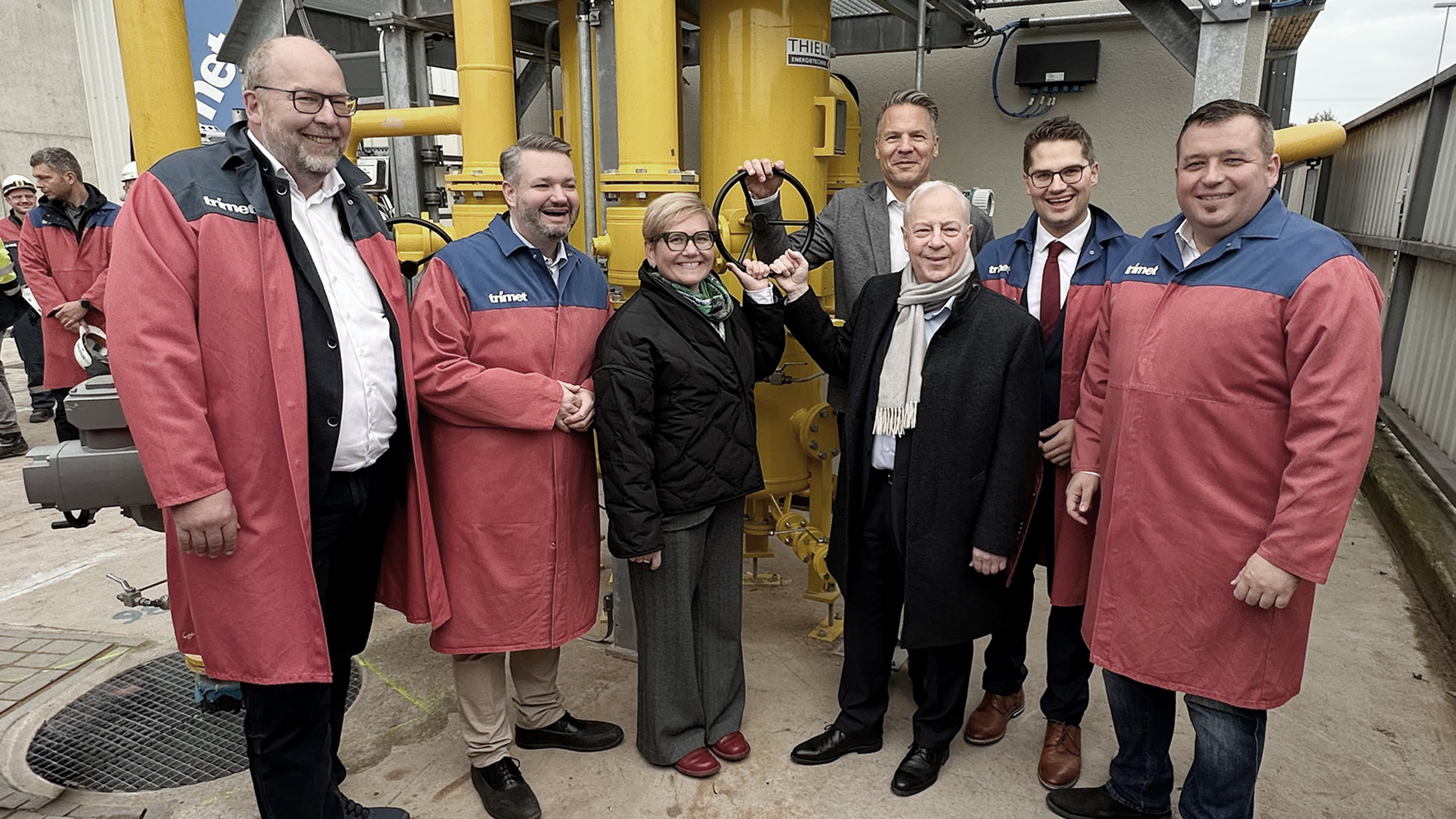
TRIMET has switched the energy supply at its Gelsenkirchen recycling plant to hydrogen-rich industrial gas. The melting furnaces at the city’s harbor will now run on coke oven gas containing more than 60 percent hydrogen. This change will reduce the materials specialist’s direct CO₂ emissions at the site by approximately 4,000 metric tons per year, equivalent to about one-quarter of its previous emissions. The new gas supply system was officially commissioned on October 29 in the presence of guests including Markus Töns, Member of the German Bundestag; Dr. Jelena Jojic-Nedeljkovic, Executive Board Member responsible for Primary Production Technology at ArcelorMittal Bremen; and Sebastian Watermeier, Member of the North Rhine-Westphalia State Parliament.
“A strong domestic industrial sector depends on a robust basic materials industry. Aluminum plays an important role in this. That makes it all the more important to produce this material competitively here in Germany while reducing its climate impact,” says Dr. Andreas Lützerath, Member of the Executive Board of TRIMET Aluminium SE. “To achieve this, we need to make full use of the opportunities our industrial sites offer. By using industrial gas, we create synergies, conserve resources, and avoid emissions.”
The coke oven gas comes from ArcelorMittal’s coking plant in neighboring Bottrop. TRIMET purchases the gas from Uniper Energy Sales and receives it through the existing gas pipeline network. A supply pipeline approximately 700 meters long was installed to connect the recycling plant at Gelsenkirchen’s harbor to the network.
“Using coke oven gas to recycle aluminum is a good example of making smart use of industrial resources. Our collaboration with TRIMET demonstrates the potential of linking energy-intensive industries. Using our high-quality coke oven gas improves environmental performance and strengthens the competitiveness of our industrial sites,” says Dr. Jelena Jojic-Nedeljkovic, Executive Board Member responsible for Primary Production Technology at ArcelorMittal Bremen.
Due to its high hydrogen content, coke oven gas produces significantly lower CO₂ emissions during combustion than fossil natural gas. Converting the equipment to the new fuel also opens up the possibility of running the melting furnaces entirely on hydrogen in the future, once it becomes available on economically viable terms.
“I am pleased to see industry here in Gelsenkirchen driving the transformation forward through tangible investments,” says Markus Töns, who represents Gelsenkirchen in the German Bundestag. “TRIMET demonstrates how industrial value creation and climate protection can go hand in hand. This sends an important signal to our city and the entire industrial region.”
Over the past three years, TRIMET has extensively modernized and expanded its Gelsenkirchen recycling plant, increasing annual production capacity by approximately 20 percent to 70,000 metric tons of recycled aluminum. At the same time, the site’s energy supply has been restructured. A solar installation covering approximately 3,000 square meters, with a peak capacity of more than 600 kilowatts, generates electricity for on-site use. TRIMET also plans to supply industrial waste heat to Gelsenkirchen’s public district heating network.
By switching to hydrogen-rich industrial gas, TRIMET is advancing the comprehensive modernization of the site. The recycling plant combines higher production output with significantly lower CO₂ emissions and efficient energy use.
Official commissioning of the new coke oven gas supply system at TRIMET’s Gelsenkirchen recycling plant.
From left: Bernd Mensing, Managing Director of GELSEN-LOG Gelsenkirchener Logistik-, Hafen- und Servicegesellschaft mbH; Simon Nowack, Member of Gelsenkirchen’s Municipal Executive Board; Dr. Jelena Jojic-Nedeljkovic, Executive Board Member responsible for Primary Production Technology at ArcelorMittal Bremen; Dr. Andreas Lützerath, Member of the Executive Board of TRIMET Aluminium SE; Markus Töns, Member of the German Bundestag; Dr. Christian Klicki, Member of Gelsenkirchen’s Municipal Executive Board; and Sebastian Watermeier, Member of the North Rhine-Westphalia State Parliament.